Contactless Menu Solutions for Fine Dining Restaurants
Fine dining restaurants have good reason to resist QR code menus. Most implementations are terrible.
A pixelated QR code on a laminated card that opens a blurry PDF on a phone screen — that's not a dining experience. It's a compromise. And for a restaurant that charges $200 per head and obsesses over every detail from the linen to the lighting, "compromise" isn't part of the vocabulary.
But here's the thing: the problem isn't contactless menus. The problem is bad contactless menus. Done well, a contactless menu solution for fine dining doesn't cheapen the experience. It elevates it — particularly for international guests and diners with dietary requirements.
Why Fine Dining Resists Digital Menus
The resistance is understandable, and it comes from three legitimate concerns.
Aesthetics matter. Fine dining is theatre. The physical menu — often leather-bound, custom-printed, carefully designed — is part of the production. Replacing that with a phone screen feels like swapping a hand-painted sign for a sticky note.
Perceived cheapness. QR code menus became associated with pandemic-era cost-cutting. Casual restaurants adopted them because they were cheaper than printing menus, not because they improved the guest experience. That association stuck.
Control over the experience. Fine dining restaurants choreograph every moment. A physical menu arrives when the server decides, is presented with intention, and removed on cue. A QR code lets the guest browse whenever they want, which feels like losing control of the rhythm.
These concerns are valid — but they apply to poor implementations, not to the technology itself. The restaurants that recognise this distinction are finding digital menus add a layer of service that printed menus physically cannot provide.
What Fine Dining Guests Actually Want
Step back from the restaurant's perspective and consider what the guest sitting at that $200 table actually needs.
Sophistication, not complexity. They want to understand the menu without needing a sommelier to decode every dish. Complex tasting menus with unfamiliar ingredients can be intimidating — especially for guests who don't want to appear uninformed by asking too many questions.
Dietary safety without awkward conversations. A guest with a serious allergy at a fine dining restaurant faces a difficult moment. They need to disclose their allergy, trust that the information reaches the kitchen accurately, and hope that the complex, multi-component dishes they've been looking forward to can be adapted. That process disrupts what should be an effortless experience.
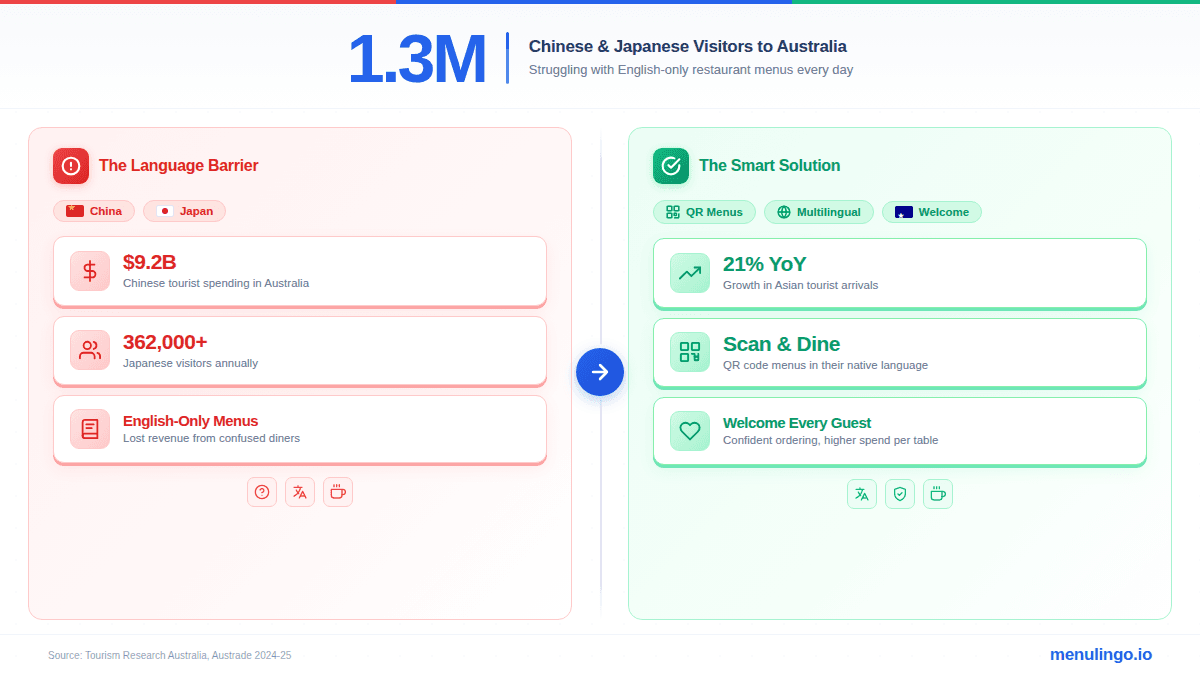
Language accessibility. Fine dining attracts international travellers — business diners, tourists, and food enthusiasts who travel specifically for culinary experiences. A menu in a single language means these guests are guessing at dish descriptions, missing nuance, and ordering with less confidence.
Personalisation. The best fine dining experiences feel tailored. A digital menu that remembers a guest's language preference or highlights dishes matching their dietary needs delivers personalisation that even the most attentive server can't replicate across a full service.
A well-designed digital menu addresses every one of these needs without the guest ever feeling like they're interacting with "technology." It just feels like better service.
How QR Menus Can Enhance Fine Dining
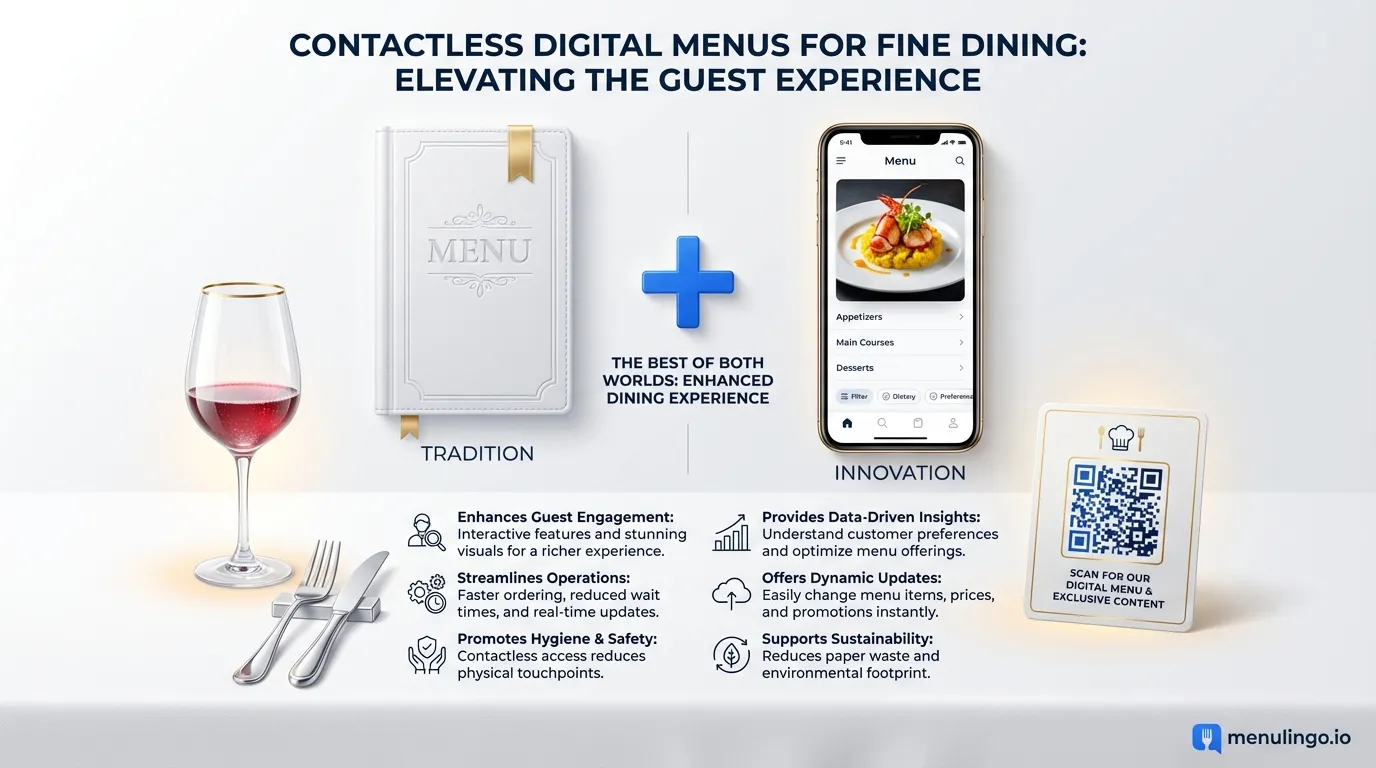
The key word is enhance, not replace. The best implementations use digital menus alongside physical menus — not instead of them.
Branded Digital Experience
A fine dining digital menu should look like it belongs in your restaurant. That means your colour palette, your typography, your logo, and imagery that matches your aesthetic. Branded digital menus built on a platform designed for restaurants — not a generic QR code generator — achieve this naturally.
The digital menu should feel like an extension of your brand, the same way your website does. If a guest scans a QR code and lands on something that looks like a takeaway ordering app, you've failed. If they land on something that looks like your restaurant, you've succeeded.
Discreet Table Presentation
The QR code itself needs the same design consideration as your table settings. Premium options include:
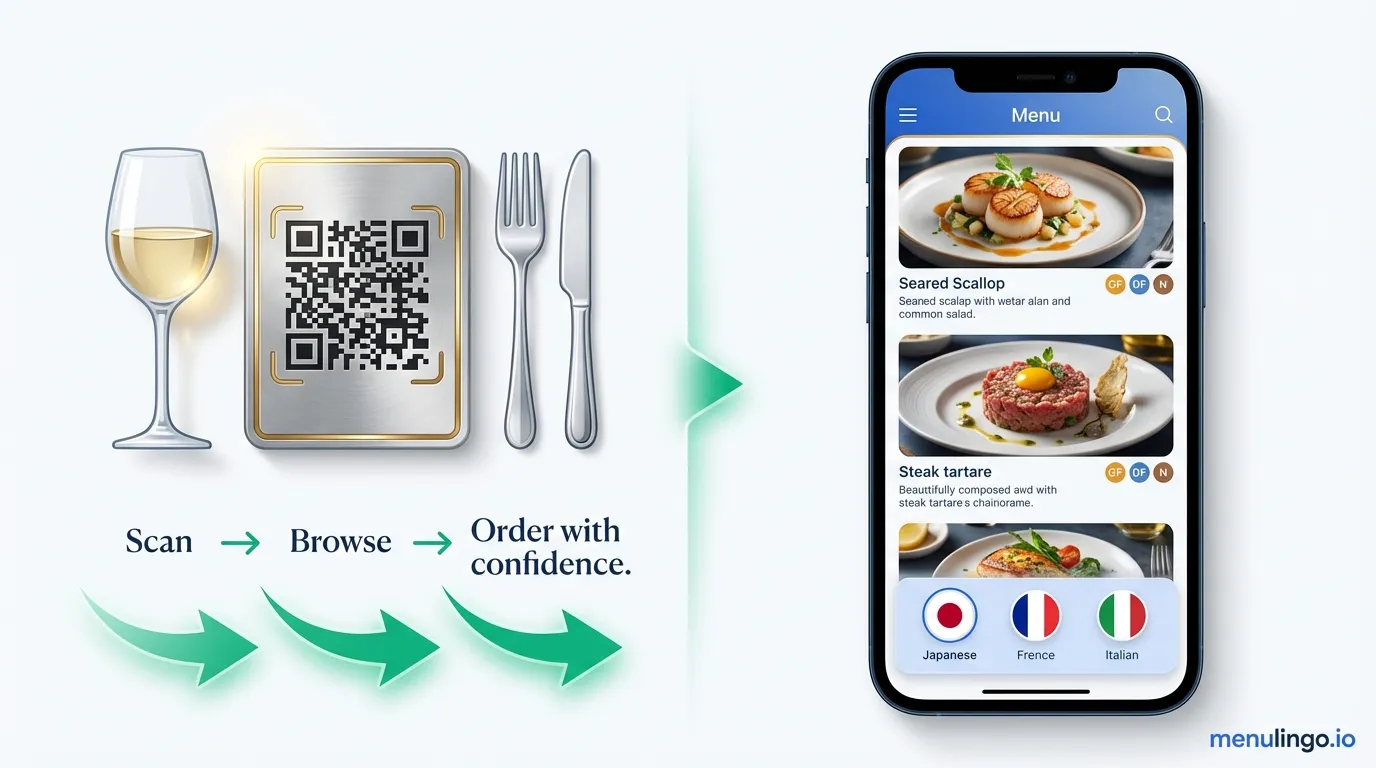
- Engraved metal table cards that match your cutlery aesthetic
- Embossed card stock with your logo and a subtle QR code
- Embedded codes in table surfaces for a completely seamless look
- Menu-card inserts where the QR code sits alongside (not replaces) the printed menu description
The goal: a guest should be able to scan if they want to, and completely ignore the code if they prefer the printed menu. No pressure, no disruption.
No App Download Required
This is non-negotiable for fine dining. If a guest has to download an app, create an account, or navigate a third-party platform, you've already broken the experience. The QR code should open a mobile-optimised web page instantly — no friction, no installation, no login.
Instant Language Switching
Here's where digital genuinely outperforms print. A Japanese business traveller at your restaurant in Melbourne can scan the QR code and read your entire menu — dish names, descriptions, ingredients, allergen information — in Japanese. Instantly. No waiting for a server who speaks their language, no pointing at items uncertainly, no missed nuance.
This isn't machine translation pasted into a Google Doc. Proper AI translation for restaurant menus handles culinary terminology, regional ingredient names, and dish descriptions with the accuracy that fine dining demands. The difference between Google Translate and purpose-built menu translation is the difference between "adequate" and "appropriate for your venue."
The Allergen Advantage for Fine Dining
This is arguably the strongest case for digital menus in fine dining, and it's the one most often overlooked.
Fine dining dishes are inherently more complex than casual fare. A single course might contain 15 or more ingredients across multiple components — sauces, garnishes, foams, emulsions, and preparations that each introduce potential allergens. For a guest with a serious allergy, navigating this complexity is genuinely stressful.
Consider the current process: the guest tells their server about their allergy. The server relays it to the kitchen. The chef reviews the tasting menu and identifies which courses need modification. The modifications are communicated back to the server, who relays them to the guest. At every step, there's a risk of miscommunication.
With allergen safety built into a digital menu, a guest can filter the entire menu by their dietary requirements before they even sit down. They can see exactly which dishes contain their allergens and which are safe — without announcing their allergy to the table, without waiting for a server to check with the kitchen, and without the anxiety of hoping nothing was missed.
For fine dining restaurants, this isn't just a compliance feature. It's a hospitality feature. It tells guests with allergies: "We've thought about you. You're safe here. Enjoy the meal."
Research consistently shows that diners with food allergies are more loyal to restaurants where they feel safe and understood. For a fine dining venue, turning an anxious first-time visitor into a confident regular is worth far more than the cost of any software.
Wine and Drink Pairing Context
Fine dining menus often include suggested wine or drink pairings, but printed menus are limited by space. You can list a wine name, maybe a region, but detailed tasting notes or pairing rationale rarely fit.
A digital menu removes that constraint. Each dish can include:
- Suggested wine pairings with tasting notes and region details
- Non-alcoholic pairing options — increasingly expected at fine dining level
- Ingredient spotlights explaining the provenance or technique behind key components
- Seasonal notes that change with the menu without reprinting
This depth of information enhances the dining experience for food-knowledgeable guests while helping less experienced diners feel more confident in their choices. It's the kind of information a great server provides verbally — but captured and available for every guest, every time.
And because updates are instant, when the sommelier switches a pairing recommendation mid-week, the digital menu reflects it immediately. No waiting for a print run. No crossing out the old wine with a pen.
The International Guest Premium
Fine dining has always attracted international travellers. A Michelin-starred restaurant, a celebrated local institution, or an acclaimed chef's latest venture — these are destinations, and the guests who travel for them come from everywhere.
The financial reality is straightforward: international diners who can read and understand your menu order with more confidence. More confidence typically means broader ordering — additional courses, wine pairings, and desserts that they might skip if they're uncertain about ingredients or descriptions.
Multilingual menus built for fine dining aren't about accessibility compliance (though that matters too). They're about removing the friction between a guest who wants the full experience and a language barrier that prevents it.
Our detailed look at serving international tourists without language barriers explores this dynamic across restaurant types, but for fine dining specifically, the stakes are highest. A casual restaurant can get away with pointing at pictures. A fine dining restaurant cannot.
Implementation: Making It Elegant
Moving from concept to reality requires attention to detail that matches the rest of your fine dining operation.
Step 1: Choose the Right Platform
The platform matters enormously. A generic QR code that links to a PDF undoes everything discussed above. You need a restaurant digital experience software platform built for menu presentation — one that supports branding, allergen filtering, multilingual access, and mobile-optimised design out of the box.
This is the distinction between QR code menu advantages done well and the cheap implementations that gave QR menus a bad reputation in the first place.
Step 2: Design the QR Code Presentation
Work with your interior designer or brand team to create QR code table presentations that match your venue:
- Material should match or complement your existing table items — metal, premium card stock, or wood
- Size should be discreet — no larger than a business card
- Placement should feel intentional, not afterthought — alongside the printed menu, on the table card, or integrated into the table setting
- Branding should include your logo or monogram, reinforcing that this is your menu, not a third-party app
Step 3: Brief Your Staff
Your front-of-house team needs to understand the digital menu as well as they know the printed one. They should be able to:
- Explain it naturally when guests ask ("That code gives you our full menu in your preferred language, including allergen information")
- Not push it on guests who prefer the printed menu
- Use it as a tool during service ("I can see you have a tree nut allergy flagged — let me walk you through the best options for tonight's tasting menu")
The digital menu is a service tool, not a replacement for service.
Step 4: Keep It Optional
This is critical for fine dining. The digital menu should always be an option alongside the printed menu — never the only option. Some guests will prefer print. Some will prefer digital. Some will use both.
The goal is to give every guest the experience they prefer, not to force a technology choice. Offering both shows confidence in your digital experience while respecting tradition.
Step 5: Review and Refine
Use menu analytics to understand how guests interact with the digital menu. Which dishes get the most views? Which languages are most requested? Do guests engage more with the tasting menu or a la carte?
This data helps you refine both the digital and physical menu over time — and it's information that printed menus can never provide.
Elegant Menus, Modern Expectations
Fine dining is about creating extraordinary experiences. In 2026, that includes meeting guests where they are — on their phones, in their language, with their dietary needs handled gracefully.
A contactless menu solution for fine dining doesn't mean replacing leather-bound menus with phone screens. It means adding a layer of personalisation, safety, and accessibility that enhances what your team already does beautifully.
MenuLingo is built for restaurants that care about how their menu looks and functions. Branded templates, AI-powered allergen detection, and multilingual support across 50+ languages — designed to match your restaurant's standards, not undermine them.
See MenuLingo pricing to find the right plan for your venue, or start your free trial to see how your menu looks in minutes.
Ready to make your menu multilingual?
Join restaurants already serving diners in 9 languages with accurate allergen information. 14-day free trial, no credit card required.
Start Your Free Trial