The Restaurant Owner's Secret Weapon for Dining Experience
Every restaurant owner has a version of the same dream: a packed dining room, happy guests, great reviews, and people lining up to come back. The gap between that dream and reality often comes down to something surprisingly simple — whether every person who walks through your door actually feels welcome.
Not politely tolerated. Not efficiently processed. Genuinely welcome. The kind of welcome where a guest from Tokyo, Taipei, or Turin can sit down, read every dish on your menu in their own language, understand exactly what they're ordering, feel safe about their allergies, and leave thinking, "That was one of the best meals of our trip."
That moment — that single dining experience — is a restaurant owner's secret weapon for dining experience that compounds into something far more valuable than any marketing campaign.
One Great Experience, Ten New Guests
Think about what happens after a tourist has a genuinely memorable meal. They don't just enjoy it and move on. They talk about it.
They tell their travel companions — "You have to try this place, they had the menu in Mandarin." They post a photo of their dish on Instagram or TikTok with a location tag. They write a Google review. They mention it in a WhatsApp group back home. They add it to a Xiaohongshu post for other travellers heading to your city.
One guest who felt cared for becomes a broadcasting station for your restaurant. The hospitality industry has long understood that word of mouth is the most powerful marketing channel available, and international travellers are among the most active sharers of dining experiences.
Now think about what happens when that same guest can't read the menu. They order two safe-looking mains, skip dessert, pay, and leave. They don't post anything. They don't review you. They don't tell anyone. The experience was forgettable, so it gets forgotten.
The difference between these two outcomes isn't the food, the decor, or the service speed. It's whether the guest could engage with your menu. That's it.
Why Reviews in Multiple Languages Change Everything
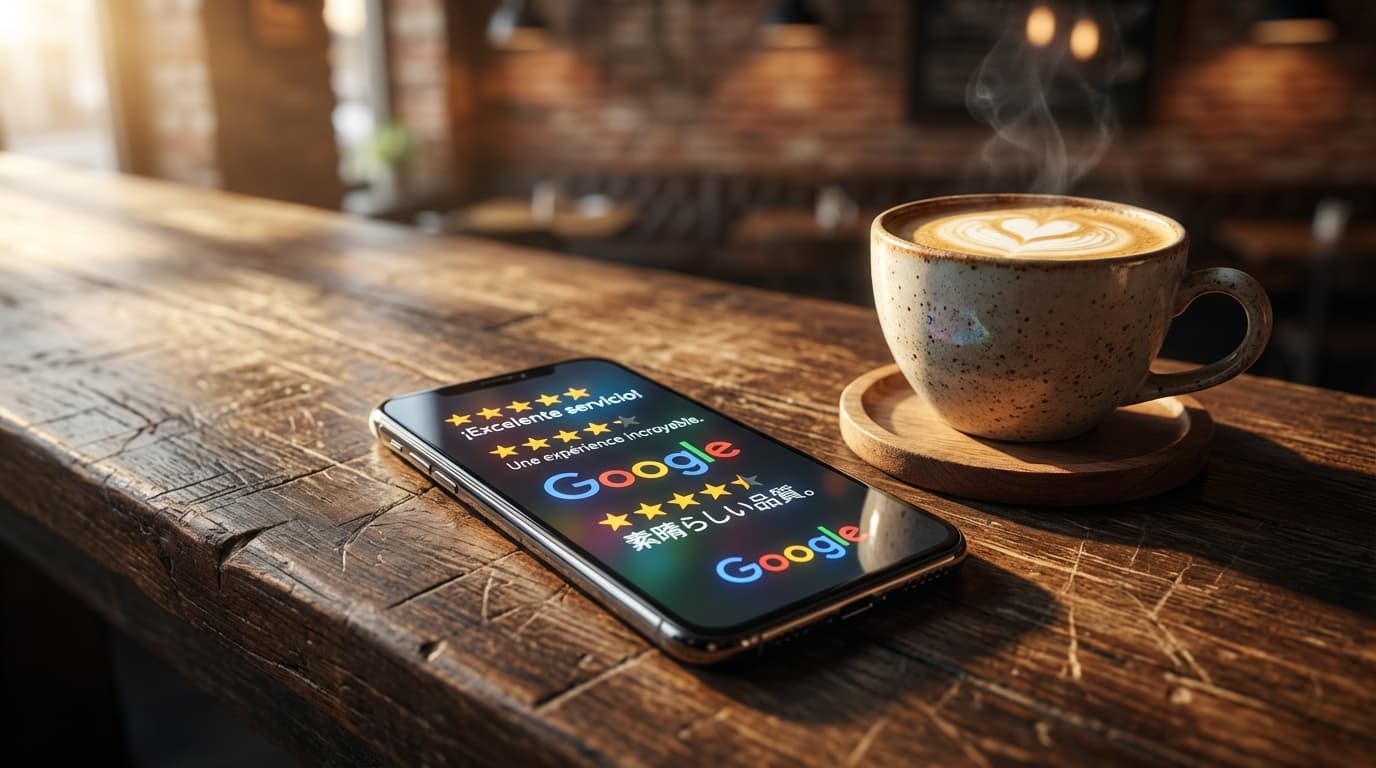
Here's something many restaurant owners don't consider: when international guests leave reviews, they often write them in their own language. A Korean tourist reviewing your restaurant on Google will frequently write in Korean. A Brazilian guest writes in Portuguese.
Those reviews are visible to other speakers of that language. When a Japanese traveller searches for restaurants in your area, Google surfaces Japanese-language reviews from other Japanese diners. Suddenly, your restaurant appears in search results with social proof specifically tailored to that traveller's language community.
This creates a virtuous cycle. A few positive reviews in Mandarin attract more Mandarin-speaking diners. Those diners leave more Mandarin reviews. Within a season, your restaurant becomes known in Chinese travel communities as a place that welcomes international guests.
The same cycle operates in every language simultaneously. Korean reviews attract Korean diners. Arabic reviews attract Arabic-speaking travellers. Each language community builds its own momentum, and your restaurant benefits from all of them.
Restaurants without multilingual menus rarely accumulate these foreign-language reviews, because the dining experience for international guests is rarely worth writing about. The revenue impact of that language barrier extends far beyond the single visit — it's the lifetime value of every guest who never came back and never told anyone to visit.
The Social Media Effect You're Not Capturing
Restaurant social media marketing has become a multi-billion-dollar industry, but the most effective restaurant content isn't created by the restaurant at all. It's created by guests.
When a tourist has a remarkable dining experience, they photograph it. The beautifully plated wagyu, the hand-rolled pasta, the cocktail with the edible flower — these are the images that end up on Instagram stories, TikTok food compilations, and travel vlogs. Each post carries your restaurant's name and location to an audience you could never reach through paid advertising.
But here's the part that matters: guests only create this content when the experience feels special. If a diner spent half the meal confused by an English-only menu, pointing at items uncertainly and hoping for the best, they're not going to photograph their dinner and tag your location.
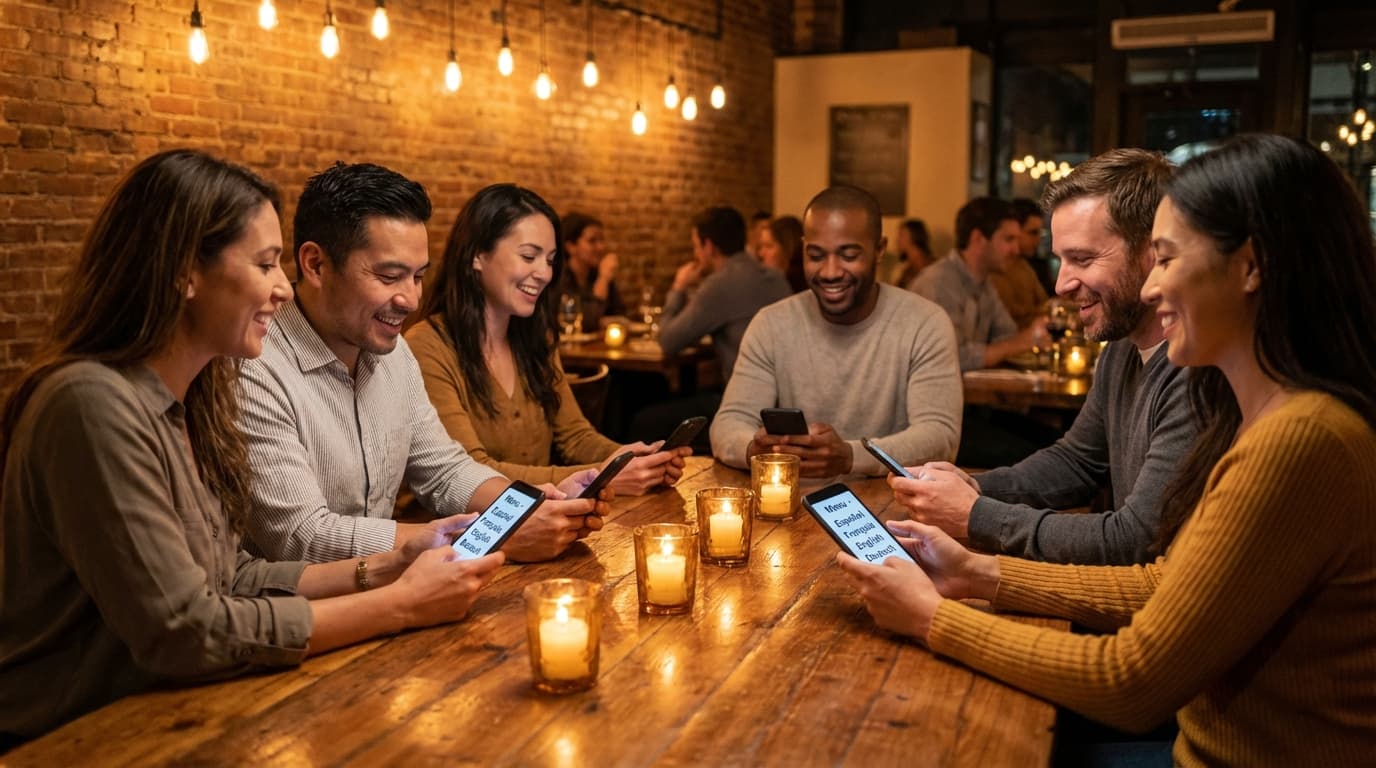
The menu is the gateway to the shareable moment. When a diner reads a vivid description of your signature dish in their own language, understands exactly what makes it special, orders it with excitement, and then watches it arrive looking exactly as described — that's the moment the phone comes out. That's the photo that gets posted. That's the organic reach you can't buy.
Restaurants that provide multilingual digital menus are generating this organic social media content consistently, from guests across dozens of language communities, without spending a dollar on influencer partnerships or paid social campaigns.
The Allergen Trust Factor
There's a dimension to the dining experience that goes beyond enjoyment: safety. For the estimated 8-10% of the global population living with food allergies or intolerances, every restaurant meal carries a degree of risk.
When a guest with a serious allergy sits down and discovers they can filter your entire menu by allergen, in their own language, the relief is profound. They're not relying on a waiter who may not fully understand their broken-English explanation of a tree nut allergy. They're not gambling that the dish they're pointing at doesn't contain the ingredient that could send them to hospital.
That feeling of safety translates directly into spending and loyalty. A diner who feels safe orders more freely. They try the dishes they actually want, not just the ones they're confident won't harm them. They order dessert. They come back.
And they tell other people with allergies. Allergy communities — online forums, Facebook groups, travel blogs for food-allergic travellers — are tight-knit and incredibly active. A recommendation for a restaurant that handles allergens well, in multiple languages, carries enormous weight. One review mentioning your allergen safety features can drive dozens of visits from guests who specifically seek out restaurants they can trust.
The Competitive Advantage of Being "The Restaurant That Welcomes Everyone"
In any tourist area, dozens of restaurants compete for the same international diners. Most of them offer roughly similar food at roughly similar prices. The differentiator that guests remember isn't usually the menu itself — it's how the restaurant made them feel.
Being known as the restaurant that welcomes everyone is a competitive advantage that compounds over time. It shows up in reviews ("they had the menu in our language"), in travel-community recommendations, in social media posts, and in repeat visits from guests who remember how comfortable they felt.
This positioning is difficult for competitors to replicate quickly. By the time they notice your growing international reputation and decide to add multilingual support, you've already built months or years of foreign-language reviews, social media mentions, and community recognition. First-mover advantage in hospitality is real and durable.
The restaurant down the street may have better pasta or a nicer fit-out. But if your international guests feel more welcome at your tables, they're coming to you. And they're bringing their friends.
How Word of Mouth Works Differently for International Diners
Local word of mouth is powerful but geographically limited. A regular who loves your restaurant might tell five friends, all of whom live nearby and might visit eventually.
International word of mouth operates at a completely different scale. A tourist from Seoul who has an outstanding dining experience might share it with their 3,000 Instagram followers, their family WeChat group, their travel blog, and the Seoul-based food community they're part of. The audience is larger, more diverse, and more geographically distributed than any local recommendation network.
Travel communities also have longer memories than local ones. A TripAdvisor review from two years ago still influences booking decisions today. A Xiaohongshu post about your restaurant continues to surface in search results long after the guest has returned home. The content created by one happy international diner keeps working for you indefinitely.
This is why the economics of multilingual menus are so compelling. The return isn't just the increased spend from that one table. It's every future guest who discovered your restaurant because of what that one guest shared.
It's Not About Technology — It's About Hospitality
Here's what separates the restaurants that thrive with international diners from the ones that merely tolerate them: the successful ones don't think of multilingual menus as a technology investment. They think of them as a hospitality decision.
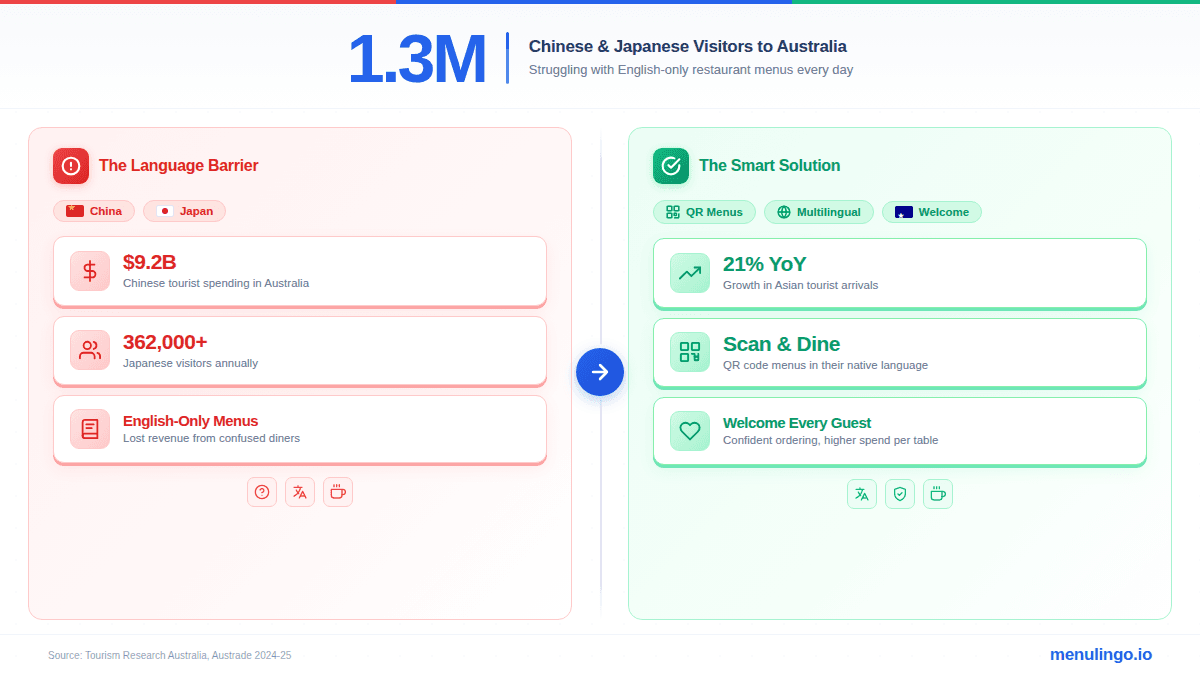
A printed menu in one language says, "You're welcome here if you speak our language." A digital menu in 100 languages says, "You're welcome here, full stop."
That distinction matters more than any feature list, any translation accuracy metric, or any piece of restaurant technology. The technology is just the mechanism. The message — "we thought about you before you arrived" — is what guests remember.
This is why QR code menus that offer instant language switching have become standard in forward-thinking restaurants worldwide. Not because the technology is impressive, but because the guest experience it enables is remarkable.
The Compounding Returns of Getting This Right
The returns from creating great international dining experiences compound in ways that are easy to underestimate:
Month one. A few international guests discover they can read your menu in their language. They spend more. They leave positive reviews.
Month three. Those reviews start appearing in search results for travellers researching restaurants. Your international covers increase. More reviews follow.
Month six. Travel blogs and community forums mention your restaurant. Tour guides start recommending you. Your weekend bookings include tables specifically reserved by international visitors who found you through word of mouth.
Month twelve. Your restaurant has hundreds of foreign-language reviews across Google, TripAdvisor, and regional platforms. You've become a known destination for international diners. Your average spend per cover has increased because international guests are ordering with confidence — full courses, premium drinks, desserts.
None of this required an advertising budget. It required one decision: to make every guest feel welcome, regardless of what language they speak.
What Does This Look Like in Practise?
The practical implementation is straightforward. You need a menu system that translates your dishes accurately into the languages your guests speak — not the garbled output of generic translation tools, but translations that preserve the appeal and accuracy of every dish description.
You need allergen information displayed in every language, so guests with dietary requirements feel safe ordering. You need a QR code at every table that works instantly, with no app downloads or registrations required.
And you need the ability to update everything in real time, so your menu never becomes outdated in any language.
The restaurants seeing the best results from multilingual menus share a few common traits. They treat international guests as an opportunity, not an inconvenience. They train their staff to guide diners to the QR code naturally. And they pay attention to which languages their guests use most, adjusting their translation priorities accordingly.
The best menu management platforms make all of this simple — upload your menu once, and the translations, allergens, and QR codes take care of themselves.
Your Menu Is Your First Impression — Make It Count
Every guest who walks into your restaurant forms an impression within seconds. For international guests, that impression is shaped almost entirely by whether they can read the menu. A warm smile from the host is wonderful, but it doesn't help a guest understand what "twice-cooked duck with Davidson plum jus" means.
Your menu is the moment of truth. It's where a nervous tourist relaxes and thinks, "They've got this in my language — I'm going to have a great meal here." Or it's where they tense up, order something safe, and start planning where to eat tomorrow instead.
The restaurant owner's secret weapon isn't a marketing strategy, a social media plan, or a review management tool. It's the simple, powerful act of making every guest feel like they belong at your table. The reviews, the word of mouth, the social media shares, the repeat visits — those are the natural consequences of genuine hospitality.
Ready to Welcome Every Guest?
MenuLingo helps restaurant owners create multilingual menus in over 100 languages, with built-in allergen safety and instant QR code access. Plans start from $19.99/month with a 14-day free trial — no credit card required.
See which plan fits your restaurant, or start your free trial today.
Ready to make your menu multilingual?
Join restaurants already serving diners in 9 languages with accurate allergen information. 14-day free trial, no credit card required.
Start Your Free Trial