QR Code Menus: From COVID Necessity to Competitive Advantage
During the pandemic, QR code menus were a necessity. Restaurants adopted them overnight, often with poorly formatted PDF menus that diners struggled to read on their phones. When restrictions lifted, many restaurants abandoned QR codes and went back to printed menus.
The restaurants that kept their QR code menus — and improved them — are now seeing benefits that printed menus simply can't deliver.
Beyond Contactless: What QR Menus Actually Solve
The original appeal of QR menus was hygiene. But the lasting value comes from three capabilities that printed menus lack entirely.
Instant language switching. A well-built QR menu detects the diner's device language or lets them choose from available translations. A Chinese tourist scans the same QR code as a local and sees the menu in Mandarin. No separate printed menus needed, no staff translation required.
Real-time allergen filtering. Diners can tap their allergens and instantly see which dishes are safe. This happens on their device — no need to flag down a waiter, explain their requirements, and wait for the kitchen to check. The filtering is immediate, private, and accurate.
Zero-cost menu updates. When you change a dish, add a special, or adjust pricing, the QR menu updates instantly. Printed menus require reprinting — which costs money, takes time, and means old menus circulate until they're all replaced.
The Diner Experience Gap
Walk into a restaurant in a tourist area and watch international diners navigate a printed English-only menu. You'll see phone cameras pointed at menus (using Google Translate, with all its limitations), confused expressions, pointing at other tables' dishes, and eventually either a safe default order or a departure.
Now watch a diner scan a QR code and see the entire menu in their language. They browse, filter for allergens, read descriptions, and order confidently. The difference in dining experience — and average spend — is significant.
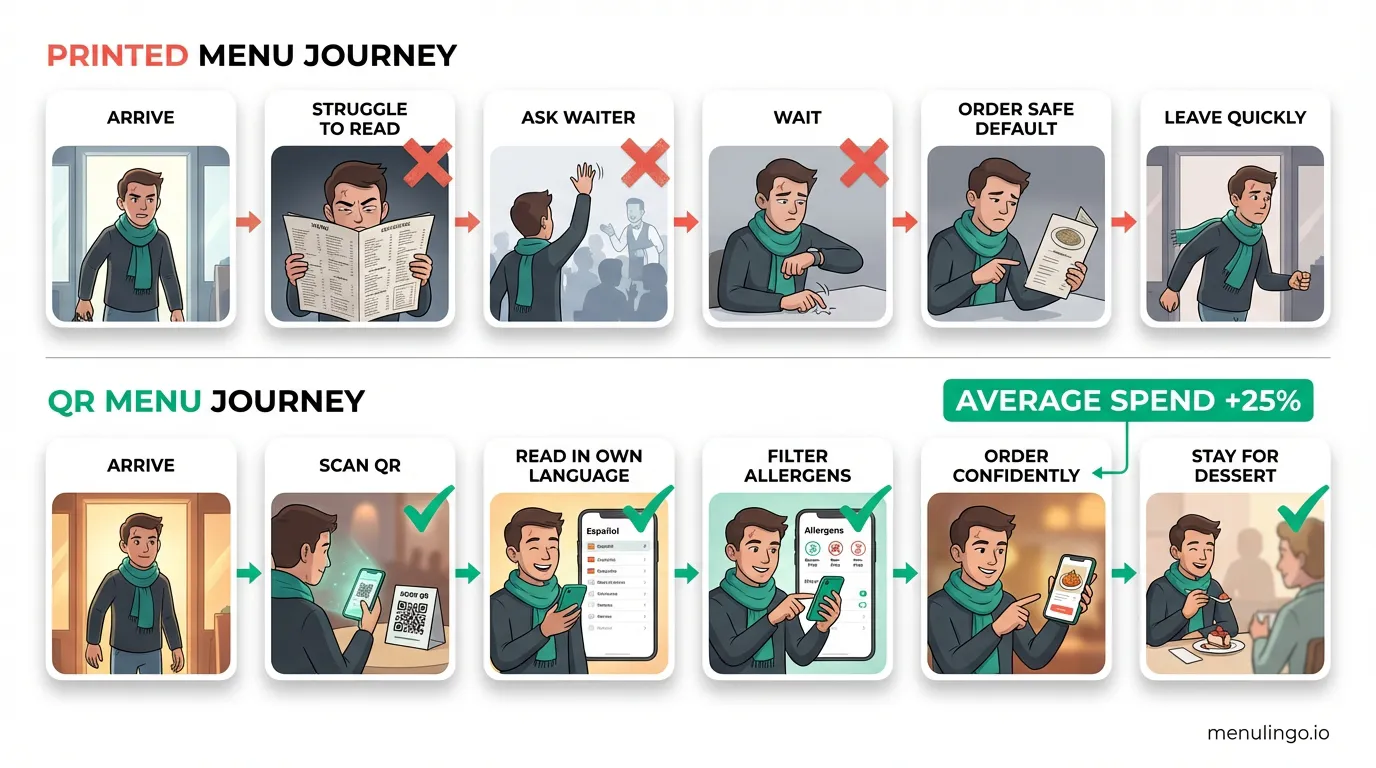
Research from the restaurant technology sector consistently shows that diners who can read and understand a menu spend more. They order more courses, try higher-value items, and are more likely to order dessert. When the menu is a barrier, diners default to the cheapest or safest option.
The "QR Codes Are Annoying" Objection
The backlash against QR menus is real, but it's targeted at bad QR implementations — not the concept itself. Diners don't enjoy scanning a code that opens a slow-loading PDF, or a third-party app that requires registration before showing the menu, or a website that doesn't work on their phone.
A good QR menu loads in under 2 seconds, displays beautifully on any device, requires no app or registration, and adds genuine value through features like language switching and allergen filtering. When the QR menu is better than the printed alternative, diners prefer it.
The solution isn't to abandon QR menus. It's to make them good.
Two-Layer QR: Codes That Never Break
A common concern with QR menus is what happens when the menu URL changes. If you've printed QR codes on table cards, coasters, or window stickers, changing the underlying URL means reprinting everything.
The solution is a redirect layer. The QR code points to a short, permanent URL (like /q/abc123) that redirects to the actual menu page. If the menu page URL changes, you update the redirect — the QR code stays the same. This means physical QR codes never become obsolete.
Analytics You Can't Get from Printed Menus
Every QR code scan generates data. Which tables scan first? What time of day sees the most scans? Which languages are most requested? Which dishes get viewed most? What allergens are filtered most frequently?
This data helps restaurants make better decisions about menu design, staffing (do you need a Mandarin-speaking host during lunch?), dish positioning, and allergen ingredient substitutions. A printed menu tells you nothing about how diners interact with it.
Cost Comparison
Printed menus for a restaurant with 30 tables, updated quarterly, cost $200–500 per reprint depending on design and material quality. For a restaurant offering menus in multiple languages, multiply that by the number of languages.
A QR code digital menu costs a fixed monthly subscription regardless of how many languages, tables, or menu changes you make. Over 12 months, the digital option is almost always cheaper — and it provides capabilities that printed menus can't match at any price.
Getting Started
The practical path is simple. Upload your existing menu to a digital menu platform, set your languages, confirm your allergen information, and generate QR codes for your tables. The transition from printed to digital can happen in a single afternoon.
Most restaurants keep printed menus available for diners who prefer them, while making the QR code the primary menu channel. Over time, as diners experience the benefits of the digital version, the printed menus see less and less use.
Before you launch, run through our digital menu compliance checklist to ensure you meet allergen, accessibility, and privacy requirements. View pricing plans or start your free trial.
Ready to make your menu multilingual?
Join restaurants already serving diners in 9 languages with accurate allergen information. 14-day free trial, no credit card required.
Start Your Free Trial