The 16 Major Food Allergens Every Restaurant Must Know
When a diner tells you they have a food allergy, the stakes are real. Allergic reactions range from mild discomfort to anaphylaxis — a life-threatening emergency. Restaurants are on the front line of allergen safety, and understanding which allergens to track is the first step toward protecting your diners and your business.
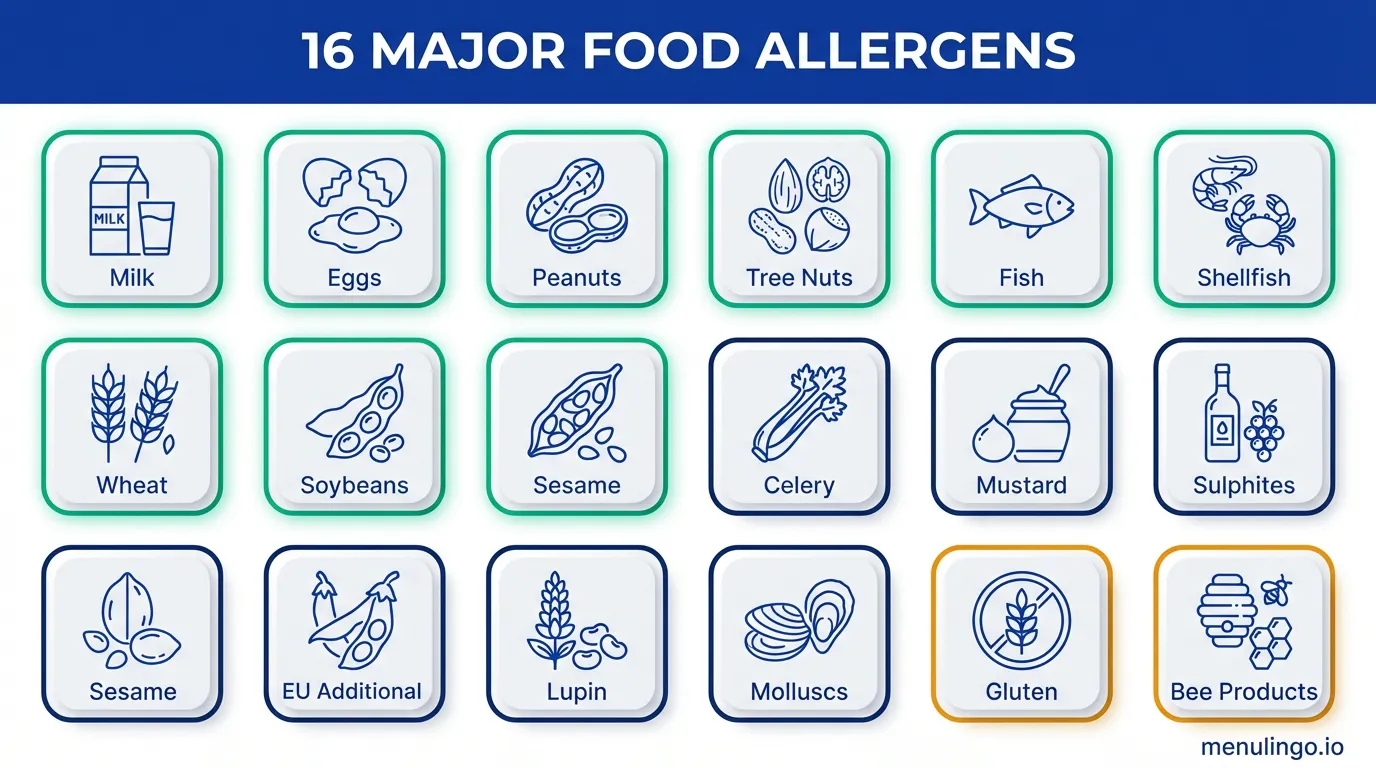
The number of allergens you're required to disclose depends on where you operate. The EU mandates 14. Australia's food standards identify 10 priority allergens. California's upcoming law specifies 9. To serve diners from any jurisdiction safely, restaurants should understand all 16 allergens that appear across these frameworks.
The Universal Nine
These nine allergens appear in virtually every allergen regulatory framework worldwide. They're the foundation of any allergen management program.
1. Milk (Dairy) — Found in obvious sources like cheese, cream, and yoghurt, but also hidden in bread, battered foods, sauces (bechamel, carbonara), mashed potatoes, and many processed ingredients. Butter is a dairy product that's easy to overlook. Ghee, while lower in milk proteins, is still classified as a dairy allergen.
2. Eggs — Present in pasta, battered and crumbed items, mayonnaise, some sauces (hollandaise, bearnaise), baked goods, and many desserts. Egg wash is used on pastry, bread rolls, and pie crusts. Some cocktails use egg white.
3. Peanuts — A legume, not a tree nut, which is why they're classified separately. Found in satay sauces, some Asian cuisine, peanut oil (refined peanut oil may be safe for some, but not all, allergic individuals), and as a garnish on salads and desserts.
4. Tree nuts — Includes almonds, cashews, walnuts, hazelnuts, pecans, pistachios, macadamias, and Brazil nuts. Found in pesto (pine nuts), marzipan, praline, nougat, nut milks, nut-crusted dishes, and many desserts. Coconut is classified as a tree nut by the US FDA.
5. Fish — Beyond obvious fish dishes, fish can appear in Worcestershire sauce, Caesar dressing (anchovies), some Asian sauces (fish sauce, oyster sauce used interchangeably), and certain stock bases.
6. Shellfish (Crustaceans) — Includes prawns, crab, lobster, and crayfish. Found in seafood chowders, bisques, paella, and some Asian dishes. Shellfish stock and shrimp paste appear in many Thai and Southeast Asian recipes.
7. Wheat — Present in bread, pasta, flour-based sauces, battered items, soy sauce (most contain wheat), couscous, and many processed foods. Important to note: wheat allergy is different from coeliac disease (gluten intolerance), though the dietary restrictions overlap.
8. Soybeans — Found in tofu, soy sauce, miso, edamame, and many processed foods. Soybean oil and soy lecithin are used widely in commercial cooking. Soy appears in unexpected places like chocolate, baked goods, and some meat products.
9. Sesame — Added to the US major allergen list in 2023. Found in tahini, hummus, some bread and burger buns (sesame seeds), Asian dishes, and Middle Eastern cuisine. Sesame oil is used in many stir-fries and dressings.
The EU Additional Five
The European Union requires disclosure of five additional allergens beyond the universal nine. Restaurants serving European tourists should be aware of these.
10. Celery — Includes celery stalks, leaves, seeds, and celeriac. Found in stocks, soups, salads, and as a seasoning component in many spice blends. Celery salt is a common ingredient in Bloody Mary cocktails and some sausage recipes.
11. Mustard — Found in salad dressings, marinades, sauces, brined foods, and many spice blends. Mustard powder is used in cheese sauces and some curries. Mustard seeds appear in Indian cuisine.
12. Sulphur dioxide and sulphites — Used as preservatives in wine, dried fruits, some sausages, and soft drinks. Also found in vinegar and some fruit juices. Concentrations above 10mg/kg or 10mg/litre must be declared in the EU.
13. Lupin — A legume used in some European bread, pastries, and pasta. Lupin flour is used as a protein supplement in some baked goods. Less common in Australian and American cuisine but increasingly appearing in gluten-free products.
14. Molluscs — Includes mussels, oysters, squid, octopus, scallops, clams, and snails. Found in seafood platters, paella, and some Asian dishes. Oyster sauce is a mollusc product used extensively in Asian cooking.
Australia-Specific Considerations
15. Lupin (also in EU list) — Included in Australia's allergen declaration requirements. Lupin flour has appeared in some Australian bakery products as a protein-rich flour alternative.
16. Royal jelly and bee pollen — While less common in restaurant settings, these appear in some health food preparations, smoothies, and specialty drinks. Australia's food standards require their declaration as allergens.
Where Allergens Hide
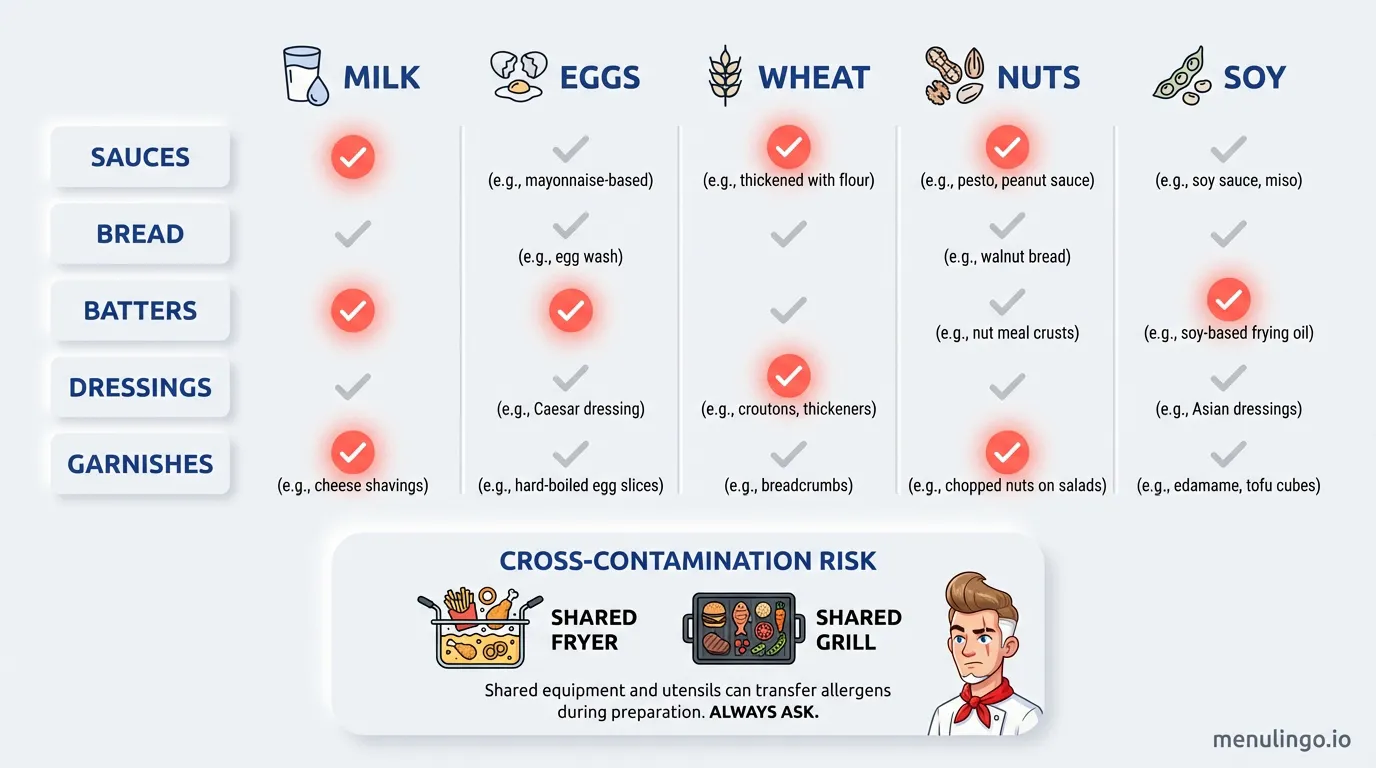
The most dangerous allergens are the ones you don't know about. Cross-contamination and hidden ingredients account for many allergen incidents in restaurants.
Shared cooking equipment is a major source of cross-contamination. Fryers used for both crumbed items (wheat, eggs) and plain items. Grills that cook both shellfish and steak. Pasta water reused between wheat pasta and rice noodles.
Compound ingredients mask allergens. A pre-made sauce from a supplier might contain soy, wheat, fish sauce, and sesame without these being obvious from the sauce name. The only way to know is to check supplier ingredient lists for every compound ingredient.
Garnishes and finishing touches are often added by habit rather than recipe. A sprinkle of sesame seeds, a drizzle of nut oil, a dusting of flour — these can turn a safe dish into a dangerous one.
Building Your Allergen Profile
Every menu item needs a complete allergen profile. Go through each dish with your head chef and document every allergen present — including those from shared cooking environments.
Update the profiles whenever a recipe changes, a supplier changes, or a substitute ingredient is used. An allergen profile is only useful if it reflects what's actually going into the dish today, not what went into it when the menu was designed.
For restaurants using digital menu systems with allergen detection, AI can identify potential allergens from ingredient lists, but the final confirmation must come from someone who knows the actual kitchen practices. AI catches what humans miss; humans catch what AI can't observe.
Need help managing allergens across your menu? See how MenuLingo works, review our compliance checklist, or start your free trial.
For a complete guide covering allergen laws across all four major jurisdictions, read our Restaurant Allergen Compliance Guide.
Ready to make your menu multilingual?
Join restaurants already serving diners in 9 languages with accurate allergen information. 14-day free trial, no credit card required.
Start Your Free Trial