How Multilingual Menus Transform the Restaurant Customer Experience
A family of four walks into your restaurant on a Saturday night. They've found you on Google Maps, seen the photos, and made the effort to visit. They sit down, pick up the menu, and stare at it. The parents exchange glances. The father points at something and shrugs. They order two dishes — the simplest items they can identify — eat quickly, and leave.
They weren't unhappy with your food. They couldn't engage with it. And the experience you spent years building — the menu you agonised over, the dishes your chef is proud of — was invisible to them.
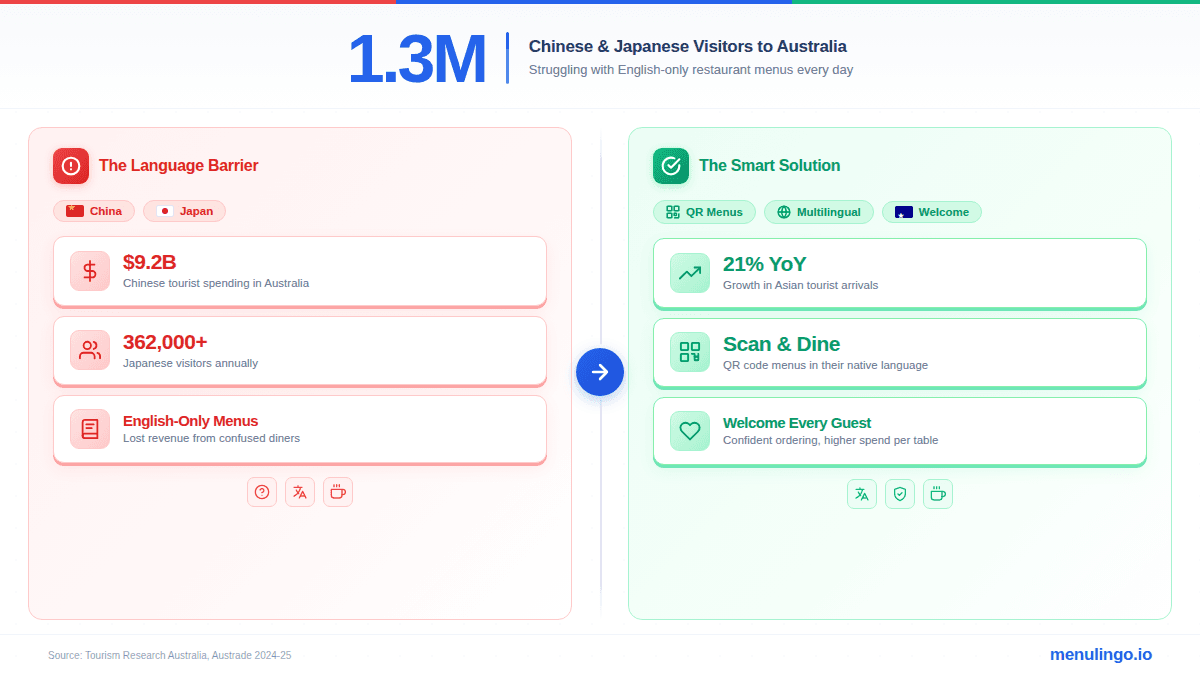
This is what the restaurant customer experience looks like for millions of international diners every year. Not bad service. Not bad food. Just a wall of words they can't read.
The Moment That Changes Everything
There's a specific moment when a dining experience transforms for an international guest. It's not when the food arrives. It's not when the waiter smiles. It's when they see the menu in their own language.
That moment is hospitality in its purest form. The restaurant is saying: we expected you. We prepared for you. You belong here.
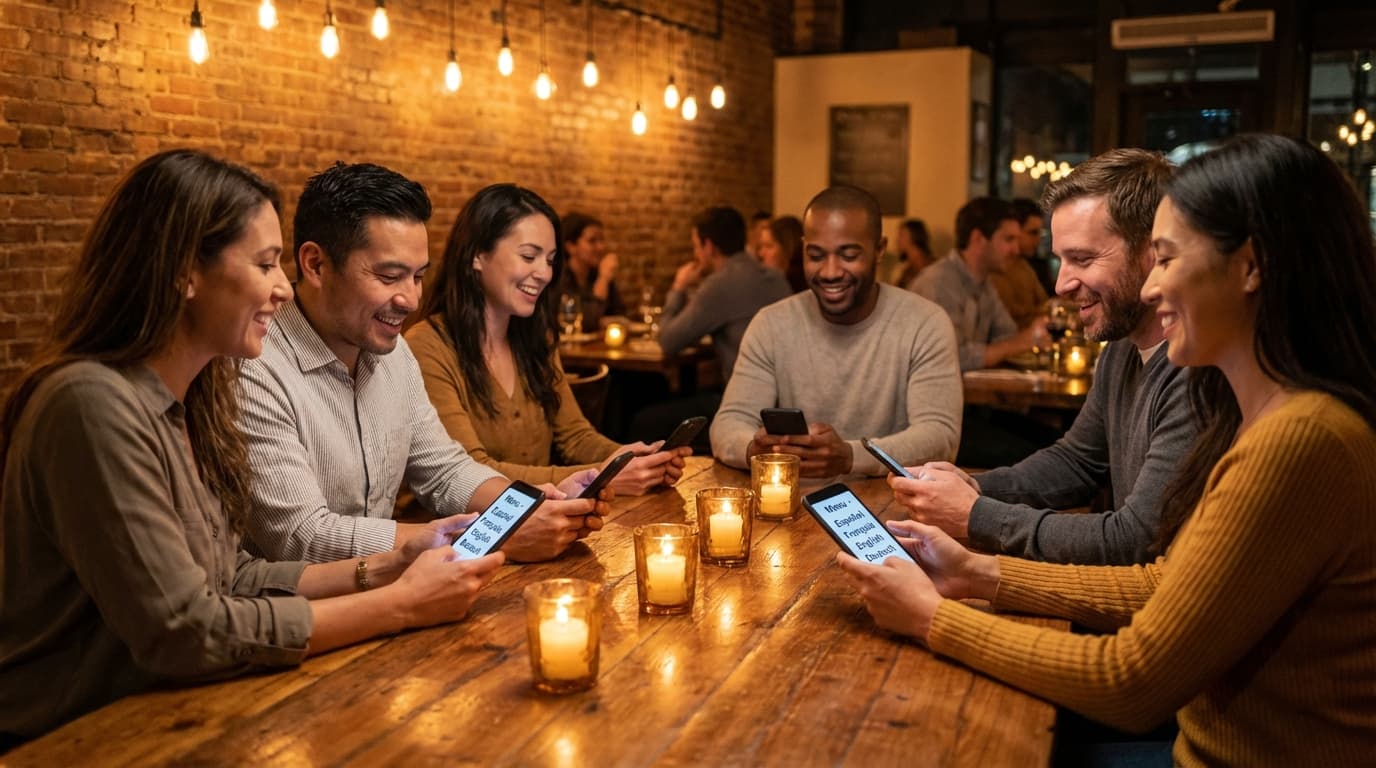
A Japanese tourist scanning your QR code and seeing every dish described in Japanese doesn't just gain information. They gain comfort. They stop being a confused visitor navigating a foreign experience and become a diner — someone choosing what sounds delicious, just like every other guest in the room.
This shift matters because the restaurant customer experience isn't built in the kitchen. It's built in the first two minutes at the table, when a guest decides whether they feel welcomed or whether they feel like an outsider managing a transaction.
How Language Access Changes Ordering Behaviour
When diners can read and understand every item on your menu, their behaviour changes in ways that directly affect your restaurant.
They Order More Courses
A diner who can't read the menu orders defensively. One main, water, no dessert. They stick to safe, recognisable items and skip anything they're unsure about — which, when the menu is in a language they don't speak, is almost everything.
A diner who reads the full menu in their language orders like a local. They browse the starters and pick one that sounds appealing. They consider the specials. They ask about the dessert menu because they saw something intriguing. Each additional course increases the time they spend at your table and the amount they spend on their bill.
They Try Signature Dishes
Your most profitable dishes are usually your most distinctive — the slow-braised lamb, the chef's tasting plate, the house-made pasta. These are also the hardest to order when you can't read the description. Language barriers push international diners toward generic items: a steak, a salad, a burger. Items where the name alone tells them roughly what they'll get.
Multilingual menus reverse this pattern. When a Chinese tourist reads a full description of your signature kingfish crudo — the ingredients, the preparation, the flavour profile — in Mandarin, they can make the same informed decision as a local diner. And informed diners order the dishes you most want them to order.
They Stay Longer
A rushed dining experience is rarely a choice. It's a consequence of discomfort. When diners can't read the menu, they want to finish the awkward interaction as quickly as possible. They order fast, eat fast, and leave.
When they can read everything, the pace changes. They browse. They discuss options with their group. They order a bottle of wine instead of two glasses. They linger over coffee. That extra 30 minutes at the table isn't just pleasant for the diner — it's additional revenue for the restaurant.
The Confidence Factor
There's a psychological dimension to the restaurant customer experience with multilingual menus that goes beyond information access. It's about confidence.
Ordering food in a language you don't speak is stressful. You're guessing at what you'll receive. You can't ask detailed questions about ingredients. If you have a food allergy, you're placing your health in the hands of a communication chain that might break down at any point.
This stress is invisible to the restaurant. The diner doesn't complain. They smile, point at the menu, and hope for the best. But internally, the experience feels uncertain and uncomfortable — the opposite of what hospitality should deliver.
Multilingual menus eliminate this stress entirely. The diner reads every ingredient, sees allergen information in their language, understands portion sizes and cooking methods. They order with the same confidence as a regular who's been coming for years.
That confidence transforms the experience from "eating at a foreign restaurant" to "dining at a great restaurant." The distinction matters enormously — for the guest's enjoyment, for their likelihood of returning, and for what they tell other people afterwards.
What Happens After the Meal
The restaurant customer experience doesn't end when the bill is paid. For international diners, what happens next has a direct impact on your future business.
Reviews That Attract More Guests
International tourists are active reviewers. Google Maps reviews, TripAdvisor, and platform-specific sites like Xiaohongshu and Dianping are where the next wave of tourists makes their restaurant decisions. A diner who felt welcomed and understood writes reviews that specifically mention the multilingual experience.
These reviews don't just rate the food. They signal to future international visitors that your restaurant is a safe, comfortable choice — which is exactly what a tourist browsing restaurant options in an unfamiliar city is looking for. Being described as "they have menus in our language" or "very welcoming for international guests" is a competitive advantage that compounds over time.
Restaurants without multilingual options don't necessarily get negative reviews. They get no reviews from international diners — or reviews that describe the experience as confusing. Either outcome diverts future tourist traffic to competitors who made the effort.
Word-of-Mouth Within Tourist Networks
Tourist communities are tightly networked. A family visiting from Korea who has a great dining experience at your restaurant tells their tour group, their travel forum, their social media following. In tourist-heavy areas, a single positive experience can generate dozens of follow-up visits within the same season.
This word-of-mouth effect is why restaurants in tourist districts that invest in multilingual menus often see international traffic increase steadily over months — long after the initial setup cost.
The Ripple Effect on Average Spend
The financial impact of improving the dining experience for non-English speakers goes well beyond the individual table.
Higher per-head spend. When diners order with confidence, they order more courses, choose premium dishes, and explore the drinks menu. Industry data consistently shows that diners who can fully understand a menu spend significantly more than those navigating a language barrier.
Better table yield. Diners who stay longer and order more per visit contribute more revenue per seat. Even if table turnover is slightly slower, the net revenue per cover increases because each diner is ordering closer to their full potential.
Reduced waste from miscommunication. When diners can read exactly what they're ordering, wrong-order returns and plate waste decrease. Kitchen efficiency improves because the dishes going out match what the diner expected.
Lower allergen risk. International diners with allergies who can read allergen labels in their own language are far less likely to order something that triggers a reaction. For the restaurant, this means reduced liability risk and fewer disrupted services. A proper digital menu with allergen compliance handles this automatically.
Why Generic Translation Doesn't Work
It's tempting to run your menu through a free translation tool and call it done. But the restaurant customer experience with multilingual menus depends entirely on the quality of those translations.
A menu description like "twice-cooked pork belly with native pepperberry glaze" requires culinary knowledge to translate accurately. Generic translation tools produce literal word-for-word output that often sounds unnatural, loses the appeal of the dish, or — in the worst cases — mistranslates ingredients in ways that create allergen risks.
Professional menu translation preserves the intent of each description. The translated version should make the dish sound just as appealing in Japanese or Spanish as it does in English. It should accurately convey every ingredient for allergen safety. And it should use natural, fluent language — not the stilted phrasing that immediately signals machine translation to a native speaker.
This is the difference between a multilingual menu that enhances the guest experience and one that undermines it. The technology behind the translation matters — and AI-powered menu translation trained for culinary contexts delivers substantially better results than generic tools.
Building Multilingual Hospitality Into Your Operations
Making multilingual menus part of your restaurant's customer experience doesn't require a major operational overhaul.
Start with your top languages. Check your diner demographics. If you're in a tourist area, the top 3-5 languages will cover the vast majority of your international guests. You don't need 100 languages on day one — start with the languages you see most often and expand from there.
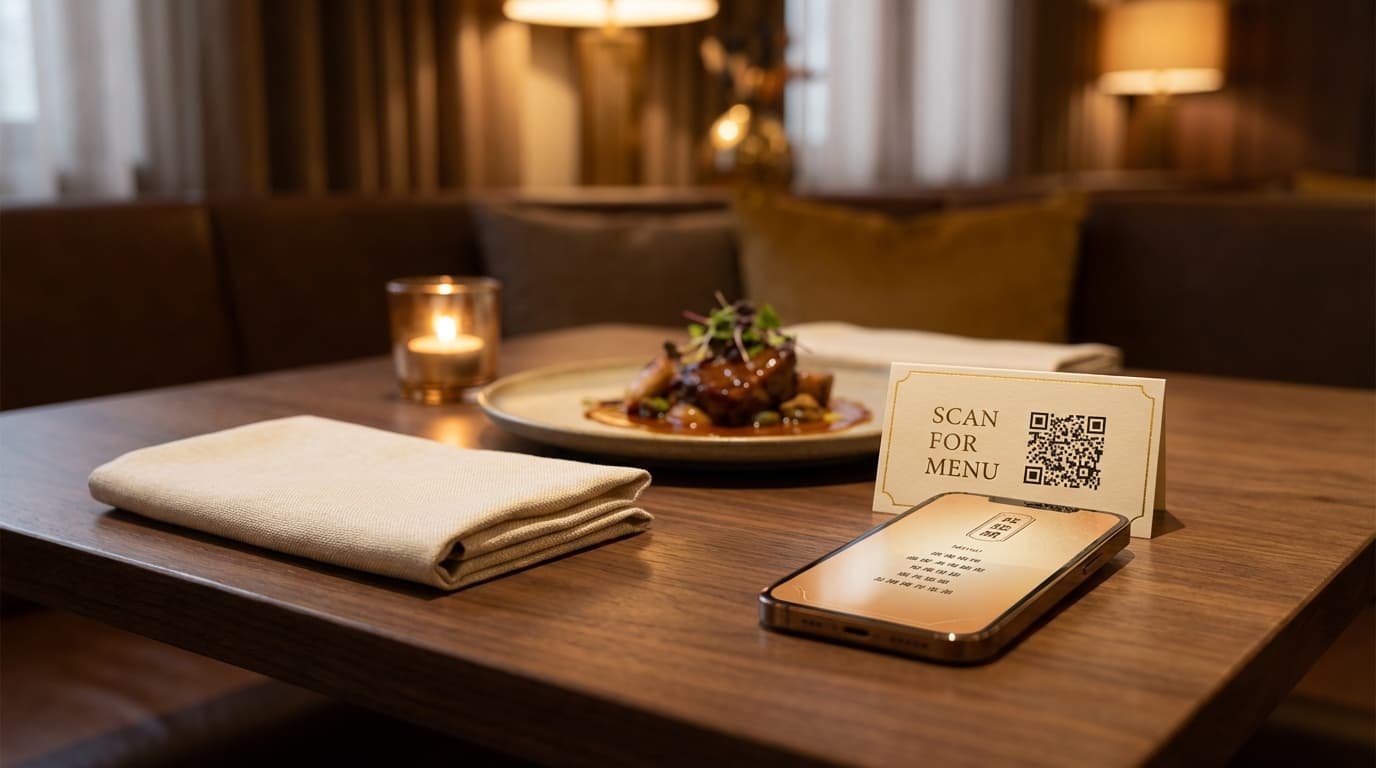
Use QR codes for seamless access. A QR code on each table that opens your menu with automatic language detection means your international guests don't need to ask for anything. They scan, they see their language, they order. The technology disappears — only the hospitality remains.
Keep translations current. A multilingual menu is only valuable if it matches your actual menu. When you update dishes, descriptions, or prices, the translations need to update too. Manual translation processes create lag; automated systems keep everything in sync.
Train your team. Let front-of-house staff know about the multilingual menu so they can direct international guests to it. A simple "we have the menu in your language — just scan the QR code" is enough. It turns a potential language-barrier moment into a welcoming one.
The Guest Experience You Actually Want to Deliver
Every restaurateur wants their guests to feel welcomed, understood, and well looked after. That's the entire point of hospitality. But for a growing percentage of diners — international tourists, recent immigrants, multilingual families — the traditional English-only menu creates an invisible barrier to exactly that experience.
Multilingual menus don't add complexity to your operations. They remove a barrier that's been silently diminishing the experience for guests who would otherwise love your restaurant. The diner who reads your menu in Mandarin or Arabic or Portuguese isn't getting a different experience from your local regulars. They're finally getting the same one.
That's not a technology feature. That's hospitality working the way it should.
Ready to Welcome Every Guest?
MenuLingo provides multilingual menus in over 100 languages with integrated allergen safety, professional AI-powered translations, and branded digital menu pages that match your restaurant's identity. Plans start at $19.99/month on the Starter plan, with a 14-day free trial so you can see the difference before you commit. View pricing or start your free trial.
Ready to make your menu multilingual?
Join restaurants already serving diners in 9 languages with accurate allergen information. 14-day free trial, no credit card required.
Start Your Free Trial