Best Restaurant Menu Management Software in 2026
Finding the best restaurant menu management software used to be straightforward. You picked a point-of-sale system, and the menu was built into it. Done.
But in 2026, the landscape has shifted. Allergen regulations are tightening across multiple countries. Diners expect digital-first experiences. International tourism is driving demand for multilingual menus. And many restaurants — especially independents — are realising they need proper menu management without being locked into an expensive POS ecosystem.
This guide breaks down your actual options, what matters when choosing, and where each type of software fits.
Why Menu Management Software Matters Now
Three forces are converging that make standalone menu management more important than ever.
Allergen regulations are expanding. The UK's Natasha's Law, the EU's Food Information for Consumers regulation, and California's upcoming allergen disclosure requirements all demand that restaurants provide accurate, up-to-date allergen information. A static PDF or printed menu makes compliance harder with every dish change. If you're tracking where your restaurant stands, our compliance checklist covers the key requirements.
Diners expect digital access. Post-pandemic QR code adoption normalised digital menus across every restaurant tier. Guests now expect to scan, browse, and filter — particularly for dietary needs. The restaurants still handing out laminated sheets are increasingly the outliers.
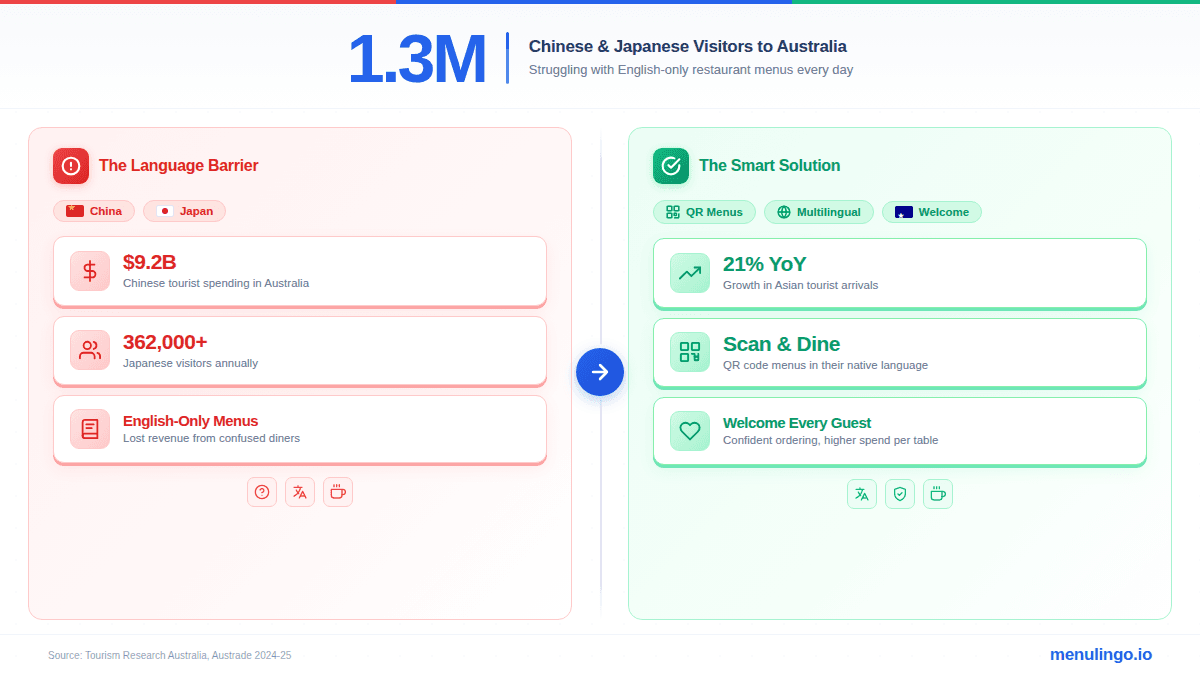
Multilingual demand is growing. International tourism has rebounded strongly, and restaurants in tourist-heavy areas face a real gap between what guests need and what a single-language printed menu provides. A restaurant in Sydney, London, or San Francisco might serve guests speaking five or more languages on any given night.
These aren't future trends. They're current operational realities, and the right software handles all three.
What to Look for in Menu Management Software
Before comparing specific tools, here's what actually matters for a restaurant digital menu app in 2026:
- Allergen compliance tools — Can you tag allergens per dish? Can diners filter by dietary need? Does it flag the 14 (or 16) major allergens?
- Multilingual support — Real translation, not just a Google Translate widget. Menu items need context-aware translation that handles culinary terminology correctly.
- QR code generation — Built-in QR codes that link directly to your digital menu, not a generic landing page.
- Ease of updates — Can you change a dish, update a price, or mark something as unavailable in under a minute?
- No POS lock-in — Can you use the menu software independently, or does it require a specific point-of-sale system?
- Mobile-optimised experience — Not a PDF on a phone screen. A proper mobile-first interface that diners actually want to use.
- Analytics — Which dishes get viewed most? Which languages are requested? Where do diners drop off?
- Pricing transparency — Clear monthly pricing without hidden transaction fees or hardware requirements.
With those criteria in mind, let's look at the three main categories.
Category 1: POS-Integrated Menu Tools
The big point-of-sale platforms — Toast, Square for Restaurants, TouchBistro, Lightspeed — all include menu management as part of their broader system.
What They Do Well
These platforms integrate your menu directly with ordering, payments, kitchen display systems, and inventory. If you update a dish in the menu, it flows through to the POS terminal, online ordering, and delivery platforms automatically. For restaurants that need end-to-end operational management, this integration is genuinely valuable.
Where They Fall Short for Menu Management
The menu functionality in POS systems is designed to support ordering workflows, not guest-facing menu experiences. That means:
- Allergen management is often basic or absent. Most POS platforms let you add item notes, but few offer structured allergen tagging with guest-facing filtering.
- Multilingual support is rare. POS menus are designed for staff terminals, not international diners.
- The guest-facing experience is secondary. The digital menu a diner sees is usually a simplified version of the ordering interface — functional, but not branded or engaging.
- Pricing scales with operational features. You're paying for payment processing, inventory management, staff scheduling, and reporting — even if you only need menu management.
- You're locked in. Switching POS systems means rebuilding your entire menu and retraining staff.
Best For
Restaurants that need a complete operational platform and are willing to accept basic menu presentation as a trade-off for integration.
Category 2: Basic QR Code Generators
At the other end of the spectrum, free or cheap QR code generators let you create a code that links to a PDF, website, or image of your menu.
Tools like QR Code Generator, Beaconstac, or even a free QR code from Google let you put a scannable code on every table in minutes.
What They Do Well
They're fast and cheap. If you just need a QR code that links to an existing PDF menu or webpage, you can set one up in five minutes for free.
Where They Fall Short
- No allergen filtering. A PDF is a static document. Diners can't filter by dietary need or see which dishes are safe for them.
- No translations. The menu displays in whatever language it was written in. Period.
- Poor mobile experience. PDFs on phone screens require pinching, zooming, and scrolling. It's usable, but frustrating.
- No analytics. You have no idea which dishes people look at, what languages they need, or whether the QR code is even being scanned.
- No real-time updates. Changing the menu means re-uploading a new PDF and potentially regenerating the QR code.
For a deeper look at what a proper QR code menu strategy can do, see our breakdown of QR code menu benefits.
Best For
Restaurants with zero budget that just need a quick digital link to an existing menu — with full awareness that it won't help with compliance, translations, or guest experience.
Category 3: Purpose-Built Menu Platforms
This is where interactive restaurant menu software built specifically for menu management sits — and where MenuLingo fits.
Purpose-built platforms focus entirely on the menu experience: how it looks to diners, how easy it is for staff to update, and how it handles compliance requirements like allergen labelling and multilingual access.
What They Do Well
- Allergen detection and filtering. Diners can filter the menu by their dietary needs and see exactly which dishes are safe. Platforms like MenuLingo use AI-powered allergen detection to flag allergens automatically as you add dishes.
- Real multilingual support. Not machine translation pasted into a field. Context-aware multilingual menus that handle culinary terminology, ingredient names, and dish descriptions properly. Our breakdown of how AI menu translation works explains the difference.
- Branded digital experience. Your digital menu matches your restaurant's visual identity — logo, colours, typography, imagery.
- QR codes built in. Generate table-specific or location-specific QR codes directly from the platform.
- Real-time updates. Change a price, remove a dish, add a seasonal special — it's live immediately.
- No POS required. Works alongside any existing system without requiring you to change your payment or ordering setup.
Where They Fall Short
Purpose-built menu platforms don't handle ordering, payments, or kitchen operations. If you need a diner to order and pay directly from the digital menu, you'll still need a separate ordering system or POS.
That said, for the growing number of restaurants that want excellent menu presentation and compliance without operational lock-in, this trade-off is a deliberate feature — not a limitation.
Best For
Independent restaurants, fine dining venues, cafes, and multi-location groups that want professional menu management with allergen compliance and multilingual support — without buying into a full POS ecosystem.
The "No Point of Sale" Advantage
One of the most common searches we see is for a restaurant menu app with no point of sale requirement. There's a good reason for that.
Many restaurants already have a POS system they're happy with — or they use a simple cash register and card terminal. They don't want to rip out their existing setup just to get a better digital menu.
POS-integrated menus force a decision: accept the menu tools built into your POS (often basic), or switch your entire operational stack to a platform with better menu features. Neither option is great.
A standalone menu management platform removes that trade-off entirely. You keep your current POS, payment processing, and ordering workflow. The menu platform handles what it's designed for — the guest-facing menu experience, allergen compliance, and multilingual access.
This is especially relevant for:
- Independent restaurants that use simple POS systems and don't want to upgrade to an enterprise platform.
- Multi-location groups where different sites may use different POS systems but need consistent menu branding.
- Fine dining venues that want a premium digital menu experience without the ordering interface that POS menus typically include.
- Seasonal or pop-up restaurants that need fast menu setup without long-term POS contracts.
If you're starting from scratch on going digital, our guide on how to create a digital menu walks through the process step by step.
Feature Comparison Table
Here's how the three categories compare on the features that matter most for menu management in 2026:
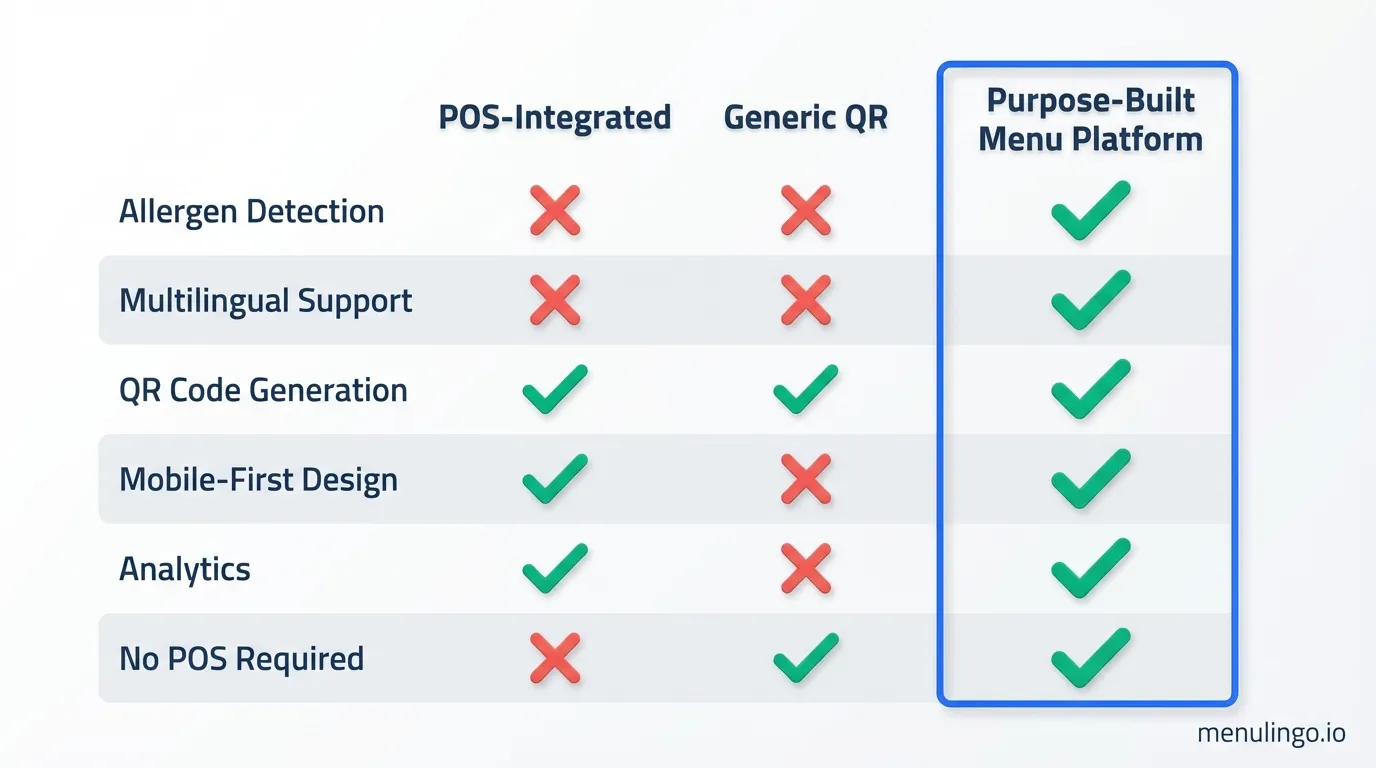
| Feature | POS-Integrated (Toast, Square, etc.) | Basic QR Generators | Purpose-Built (MenuLingo) |
|---|---|---|---|
| Allergen detection | Limited / manual notes | None | AI-powered, 16 allergens |
| Guest allergen filtering | Rare | None | Built-in per dish |
| Multilingual menus | Rare | None | AI translation, 50+ languages |
| QR code generation | Sometimes included | Core feature | Built-in, customisable |
| Mobile-optimised | Varies | No (PDF-based) | Yes, mobile-first |
| Real-time updates | Yes (for ordering menu) | Manual re-upload | Yes, instant |
| Menu analytics | Basic item sales data | None or basic scans | Dish views, language, engagement |
| POS required | Yes | No | No |
| Ordering/payments | Yes | No | No |
| Starting price | Varies by plan + hardware | Free – low cost | $19.99/mo (Starter) |
MenuLingo's full plan breakdown: Starter at $19.99/mo, Pro at $24.99/mo, and Business at $149/mo. See MenuLingo pricing for details.
How to Choose the Right Option for Your Restaurant
The decision comes down to what problem you're actually solving.
Choose a POS-integrated menu if:
- You need ordering and payments through the same system
- Menu presentation to diners is a secondary concern
- You're building (or rebuilding) your entire restaurant tech stack
Choose a basic QR generator if:
- You just need a link to an existing PDF or webpage
- You have zero budget for menu software
- Allergen compliance and multilingual access aren't priorities
Choose a purpose-built menu platform if:
- You want professional, branded digital menus your diners actually enjoy using
- Allergen compliance matters (it should — the real cost of allergen mistakes is significant)
- You serve international guests who need menus in their language
- You want to update your menu in minutes, not hours
- You don't want to change your POS system
For most independent restaurants and small groups looking for the best digital menu platform for restaurants in 2026, a purpose-built solution gives you the most relevant features at the lowest complexity.
Start With Your Menu, Not Your POS
The best restaurant menu management software is the one that solves your actual problem. If that problem is "I need better menus, allergen compliance, and multilingual support without overhauling my entire tech stack" — that's exactly what MenuLingo was built for.
Start your free trial and see how your menu looks in minutes. No POS required. No credit card needed.
Ready to make your menu multilingual?
Join restaurants already serving diners in 9 languages with accurate allergen information. 14-day free trial, no credit card required.
Start Your Free Trial